Showing posts with label Reading for Research. Show all posts

Wednesday, January 11, 2017

Reading for Research: Suddenly, I Understand Omni

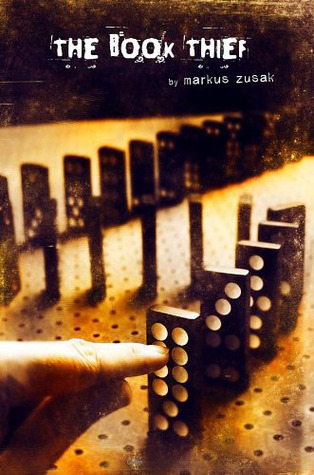
In the latter quarter of 2016, I was slowly working my way through The Book Thief by Markus Zusak, sneaking a chapter here and there until a road trip encouraged me to finish. The chapters are short, so they were easy to sneak, and by the time the road trip started for me, the book was too engaging to put down like I had before.
If you don't know about The Book Thief (I know, you probably do, but I keep running into people who don't, so just in case. Bear with me. I'll be brief), it's a story about a young German girl living in Nazi Germany at the start of WWII. As the title implies, she steals books. The interesting this is, the story's told from the perspective of Death. It's used as a framing device, a character who has seen many stories, met many people, and is pretty much the world's greatest neutral force, becoming fascinated with this one girl he keeps encountering.

While I was trying to think of how to explain this choice of framing device to someone to whom I recommended the book, I realized it: this is how you write omniscient POV.

You don't know how long I've been trying to understand omni POV. I've tried studying it and failed. I've grasped the idea of it, but the overall puzzle eluded me. I had the pieces, but I couldn't put them together in a way that made sense. "There's a narrator and they know everything" just didn't work for me, especially as someone who generally writes in close perspective. But it finally clicked here, because there's literally a narrator instead of just some unnamed force telling a story. Imagine Death as a storyteller. If you sat down in front of them and asked for a story, what you will be told is Omni. Someone who knows everyone, who knows their stories and what happened, but maybe not necessarily their feelings. I actually get it now. I just needed that skeletal face to put that damn puzzle together. Thank you, Mr. Zusak.

Monday, May 4, 2015

Book Recommendation: The Night Circus

Sometimes it's nice to be reminded that everything that's supposed to be a rule is really more of a guideline. To read a book, a well-loved, popular book filled with all those little "don't"s, and is actually well-written.

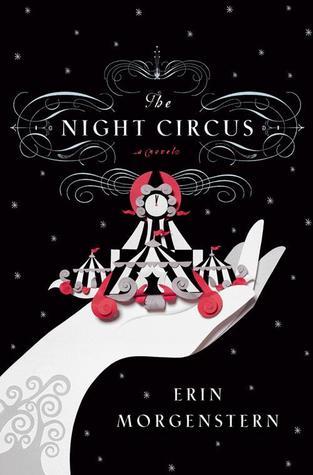
I read The Night Circus by Erin Morgenstern this weekend, and it is just that kind of book.

"Don't write in present tense." - Erin Morgenstern did so, fabulously.
"Don't use second person." - Erin Morgenstern did, albeit only briefly at the beginning of chapters.
"Don't jump around the timeline." - Erin Morgenstern, again, did, taking the reader from mid to late 1800s to the early 1900s and back again as smooth as you please.
"Don't use adverbs." - Can you guess who did in plenty? If you said Erin Morgenstern, congratulations! You win a prize. That prize is me telling you to go read The Night Circus.

It's a tale of magic, mystery, and love, one that draws you in and makes you wish you were there, could be there, that it were all real. Imagine, if you will, a traveling circus. One day, there's an empty field, and the next, it's filled with circus tents, but instead of reds and yellows and blues, it's black and white. There is no trace of color inside the gates; even the fires and candles burn white. And it's only open at night.

Right off the bat, the place is a mystery, and once The Cirque des Reves opens, the mystery deepens in a mystical way as you explore each tent: an illusionist whose dresses change colors as she changes papers into doves, a garden made of ice, a tree covered in wishes, and countless more. And all this exists as a proving ground for two young magicians who have been dragged into a contest they don't fully understand the rules of. In telling their story, Erin Morgenstern makes her circus come to life in your mind in ways most books wish they could. It's a treasure for the senses, tantalizing you with all the sounds, sights, and smells of the circus (and oh, the food! I want a Night Circus cookbook so badly) with description so vivid, you feel you could be there. For the hours it took to read, I was undeniably at the circus, and when I closed the last page, I wondered why I wasn't still.

A little historical fiction, a little romance, and a lot of fantasy, The Night Circus is one of the best books I've read in a long time. Let me put it this way. I'm a HUGE Marvel fangirl. The day after I started to read this book, I saw Avengers: Age of Ultron. And I wanted the movie to finish up so I could go home and read more. So, final verdict?

Stop reading this blog post, go see Avengers: Age of Ultron, and then buy and read this book. In that order. Now. What are you waiting for? Here, I'll even help you. End of blog!

Tuesday, May 7, 2013

Reading for Research: The Graveyard Book

I updated and synced my Kindle on Sunday night. It'd been a while since I synced everything, and I'd picked up a few free books I wanted to read. While I was making sure everything had downloaded, I noticed one I didn't remember getting: The Graveyard Book by Neil Gaiman. It had been a Christmas gift, and I'd completely forgot about it. I put aside the writing books for the night and dove right in.

Over my Camp writing (which I won, by the way. Ambled over the 15,000 mark with about 3 hours left), I was trying to apply what I picked up from my previous reading with "said" versus other words. I found myself frequently going to adverbs to express HOW they spoke. People said things quickly, quietly, exasperated, absentmindedly. Maybe a bit too much. I tried to just stick with "said" or actions, and I spent a lot of time questioning how it sounded while I was writing it. Was I doing too much? Was what I was doing incorrect? Did I need to do it every line when only two people were talking, or if three people were talking but the conversation pattern was 1 2 1 3? Was I doing too much?

I love Neil Gaiman. More than any other author I've ever admired, he tells me that I'm on the right track. He tells me that the things I'm feeling or thinking or doing regarding my writing aren't wrong. It's in his interviews, his pep talks, his social networking, and his books. And while I read The Graveyard Book, as I tried to pay attention to the same things I was worried about in my own writing, I felt more and more comforted because the more I read, the more I saw my own style in the pages. I saw events of all the things I questioned in my own writing, and more that I hadn't. I'm feeling much more confident in my writing now, and I think I'm finally ready to reopen my first novel and finally start that editing I said will be done in...

9 days.

Oh dear. This'll be an adventure.

Wednesday, April 10, 2013

Reading for Research: The Hobbit

Did you know March 25th was Tolkien Reading Day?

It's an annual event that was launched back in 2003 by the Tolkien Society. I only found out about it a few weeks ago and set my mind to picking up The Hobbit for the first time since before the first Lord of the Rings movie came out. Back then, I loved The Hobbit, but I couldn't get through Fellowship of the Ring until after the movie (the other two followed in short order). I always remembered that love, but, well, I'm not a rereader. I'd like to be a rereader, but I'm just no good at it. Given a choice between an old book I loved and a new book, I'll always pick the new one. When I was doing a 50-book reading challenge, I intended to reread the Potters AND all the Terry Pratchett books. I ended up rereading only one, Pratchett's Reaper Man. I just love the mystery of an unread book! But it being Tolkien Reading Day, The Hobbit being out on DVD, and more movies to come, I decided it was high time for a reread of the old classic.

Frankly, I am amazed that my preteen self managed to get through it without trouble, but struggled with Fellowship. For such a small book, it packs in so much information. A whole year in three hundred pages, and yet a legendary battle lasts only two or three. Deaths of dear old friends at the end get brushed over, yet you still feel them just as much as if it were drawn out. There truly has never been and will never be another J. R. R. Tolkien. And honestly, for that exact reason, I found myself not really looking for anything to learn from it. You can spend a lifetime studying Tolkien's writing style, but to what end? You'll know how he wrote, but few would dare to try and write like him. It would be better, I think, to study Middle Earth. There are few fantasy worlds as rich, vibrant, detailed, and well-loved as Tolkien's world. Study the maps, the languages, the races and cultures, the food and the song. Learn how to build a world from Tolkien, not how to write. 

Just wish I'd realized that BEFORE I finished the book. Guess I'll have to read the others. What a terrible thing. :)

Wednesday, March 6, 2013

Reading for Research: Harry Potter

I finished the Harry Potter series last night for my first full read-through ever. I've been meaning to for years, but I just never got around to it. Finally, a few weeks ago, I got the whole series for my Kindle and I've spent the last week and a half doing nothing but devouring them. By the end of it, I've found myself back in full-fledge Potter Mania, a Potterhead reborn.

Aside from experiencing the story in one fell-swoop finally, I was also reading them for the first time as a writer. Yes, I had been writing while reading them before (1-5 were all out before I finished high school), but I read them from the perspective of a fan, devouring the story for all it was worth. Now I read them, enjoying the story while trying to get as much out of it as I possibly could. After all, reading is just as important to improving as a writer as actually writing. You see what works and what doesn't; what succeeds and what falls flat; what your teachers told you to do that gets ignored, and what they told you NOT to do that also gets ignored.

I've been trying to pay attention while reading to the use of the word "said". It's one of the bigger debates in creative writing I've found: is it okay to use "said", or should you stick to the countless other words you can use, or use movement and action to designate the talker instead of anything?
Ex:
1. "Oh, stop it," she said, rolling her eyes.
2. "Oh, stop it," she groaned as she rolled her eyes.
3. "Oh, stop it." She rolled her eyes.

I tried to spend my time reading Harry Potter trying to pay attention to how JK Rowling did it, as well as her repitition when conversations were held between two people. (I.E., did she continue to write X said, Y said after the speakers were established, or did she leave it to the reader to follow the speech). What I noticed when I dragged myself out of the books long enough to pay attention to the details was that Rowling frequently uses #1, while occasionally using #2 when needed. I was surprised at some of the instances she used "said", moments that were heated or clearly yelling, but then I realized that she expressed the situation well enough to not NEED to use "yelled" or "shouted" or anything like that. Likewise, some of the cases where she used something other than "said" seemed unnecessary and broke up the flow. I didn't make out any instances #3, but that's not to say they weren't there. I just didn't notice them.

It's hard to draw yourself out a book when the movie's already playing in your head. Not as simple as pressing pause. People tend to say that your eyes skim over "said", leaving you in the book while stranger words will bring them out. It's true, really. I was more likely to stop and remember "Oh wait, that wasn't a 'said'" after a "mumbled" or "whispered" than I ever did with a single 'said'. I also noted that she didn't have many long conversations without description of motion or scenery in them to break them up.

Along with the "said" study, I was also trying to pay attention to the action scenes. It's one of my own weaknesses, and I've always been told to be more succinct in action. Short, "this happens" sentences to match the fast pace of the events. I'm not sure, having finished the series, if Harry Potter was the best choice to look into this. Magic is...detailed. Especially, the magic of Harry Potter. It NEEDS details and longer, more descriptive sentences, but it manages to put them in without breaking the pace. While I now have a better idea of how to handle magical combat, it doesn't help me for the stories I'm currently working on.

After I finish the other book I'm working on right now (Zen in the Art of Writing by Ray Bradbury) I'm planning on rereading The Hunger Games, at least the first one if not the whole series. A few short stories I'm working on are 1st person present, and the combat is more along the lines of what I need to know. As long as I can remember to pay attention and come out of the book at the important parts, it should be useful.